When green screen wins
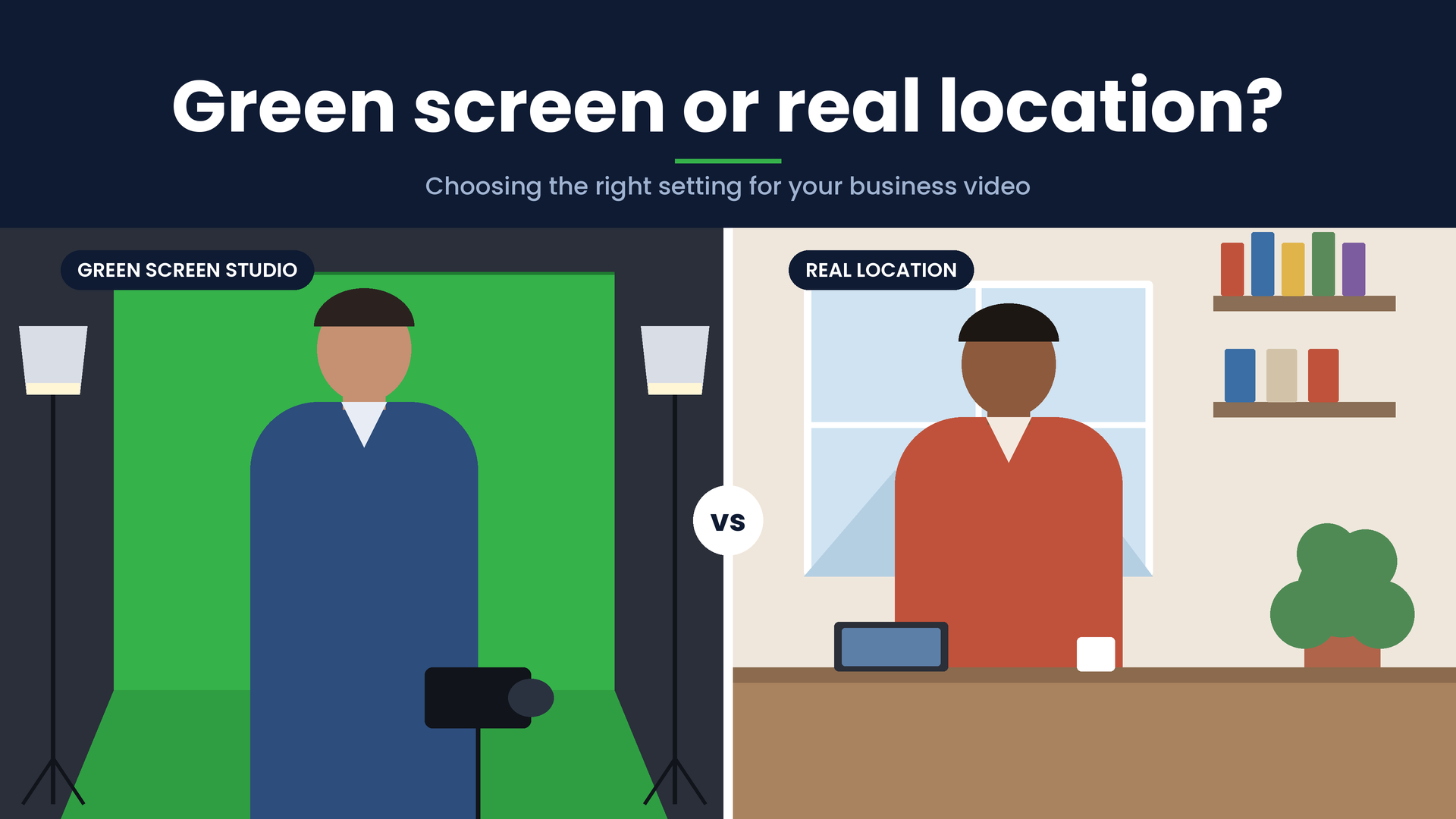
Green screen earns its place when consistency matters more than atmosphere. If you are making a series — weekly updates, a course, a run of product explainers — a keyed background means every episode looks the same, even when filming days are months apart.
It also gives you full control over brand backgrounds. You can drop in your colours, a clean graphic set, screen recordings or a stylised environment, and swap them later without reshooting.
Budget is the other big reason. One studio session can produce a dozen short videos with different backgrounds, and nobody has to book, dress or clear a location. Green screen also suits remote presenters: a spokesperson filmed in one city can be placed into the same branded set as a colleague filmed somewhere else, so the series still feels joined up.
When a real location wins
A real location wins when the audience needs to believe what they are seeing. Viewers quickly sense a composited background, and for testimonials, founder stories or anything about your people and premises, that doubt undermines the message. A genuine office, workshop or shop floor does a lot of the trust-building work for you.
Location also gives product context. If the product is a machine, a service visit or a space customers will walk into, showing it in its natural setting answers questions early. And if you are shooting UGC-style content, a real environment is part of the point — a keyed background will make casual footage look staged.
Costs and time trade-offs
Green screen moves the effort into pre-production and post-production. You need a properly lit studio, careful planning of the backgrounds and edit time for keying, cleanup and compositing. Done well, the per-video cost drops as the series grows. Done cheaply, the edges give you away.
Location moves the effort onto the shoot day. Expect time for travel, permissions, lighting an unfamiliar space and working around staff or customers. The edit is usually simpler, but every new video means a new set of logistics. As a rough rule, green screen tends to pay off from the third or fourth video onwards; a one-off piece often comes out simpler on location.
Lighting and wardrobe gotchas
Brief the presenter to avoid green clothing and accessories entirely, including subtle sage or teal tones, and be wary of shiny fabrics and fine stripes. Anything close to the key colour will vanish or flicker.
Light the screen and the presenter separately. An unevenly lit screen creates patches that are hard to key, and standing too close to it causes green spill — a coloured glow on shoulders, cheeks and hair. Give the presenter a few metres of distance and add a backlight to separate them. Fine or flyaway hair is the hardest edge to key cleanly, so tidy it before filming rather than hoping the edit will fix it. Finally, watch for shadows on the screen: they key badly and make the presenter look pasted on.
On location, watch for mixed window and overhead light, busy backgrounds and noise. Scout the space at the same time of day you plan to film.
A simple decision checklist
Before you book anything, ask: is this one video or the start of a series? Does the audience need to see a real place, people or product in use to trust the message? Will the background need to change later? Are the presenters in different places? Is the budget weighted towards the shoot day or the edit?
If you answered series, no real-world proof needed, flexible backgrounds and remote presenters, green screen is likely the better fit. If trust, product context or an authentic feel came up, start with a real location. Some projects use both: a location shoot for the hero video and a green screen set for the follow-up series.
Getting it right first time
The setting shapes how viewers judge everything else in the frame, so decide deliberately rather than by habit. If you are weighing up a green screen series against a location shoot, we are happy to talk through the options and help you plan the version that fits your message and your audience.